Tuesday, 6 February 2018

Empowering Women to Lead The Way On Climate Change


UNDP Goodwill Ambassador

November 16, 2017


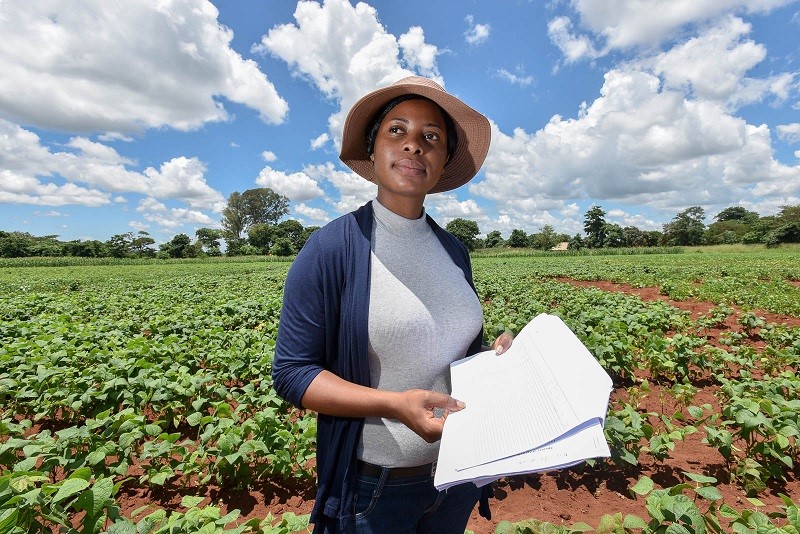
Women are poised to be grass-roots leaders for climate action, since implementation at the local level will largely fall on their shoulders. Photo: Giacomo Pirozzi/UNDP Benin


As world leaders meet for climate talks this week in Bonn, at the UN Climate Change Conference, they should embrace the tenacity, spirit and energy of women to promote more effective climate actions across the globe.

Monday, 22 January 2018

Community Reporting


By Dan Agbese

 Nov 26 2017


PHOTO: AFP / STRINGER
Borno State : Houses Ravaged by the Boko Haram Attacks.

There is a silent majority in our rural communities throughout the country. How much reporting are our news media doing on these communities? How much of their economic and social problems do we know? Indeed, do we know them?
 None of us would be proud of the answers to these questions. Community reporting is not attractive to reporters. It lacks glamour. The path to journalistic success and fortune does not cut through the isolated rural communities. Still, I suggest we bestir ourselves and take up the challenges of community reporting so we can bring our rural communities in from the cold. It would be good for the health of national development. 
The focus of community reporting is to give our rural communities human faces and human voices. The first rule in community reporting is for the reporter to know the community he wishes to report on. We have two broadly distinct communities - urban and rural. As the name implies, the urban communities live in our towns and cities and the rural communities live in the rural areas.

Friday, 19 January 2018

To Transform Agricultural Extension, Give Youth a Voice.


Tue, 01/02/2018


© Neil Palmer/CIAT
At the recent Africa Agriculture Extension week in Durban, there was a common refrain: "Demand for food in Africa is growing and expected to double by 2050." This is why we see continued growth and employment opportunities in the agricultural value chain and why agriculture extension—or training-- is more important than ever.

Climate-Smart Agriculture: Lessons from Africa, for the World

By Ademola Braimoh
Wed, 01/17/2018


The world’s climate is changing, and is projected to continue to do so for the foreseeable future.  The impact of climate change will be particularly felt in agriculture, as rising temperatures, changing rainfall patterns, and increased pests and diseases pose new and bigger risks to the global food system. Simply put, climate change will make food security and poverty reduction even more challenging in the future.

Thursday, 14 December 2017

Two Wins for Africa


Meet Emeka: Competition Winner, Changing Agriculture in Nigeria

Nwachinemere Emeka Obewe (left) and Andrew Mukose (right)

By Erick Rabemananoro  co-authors: Dasan Bobo

14/11/2017

Ideas for Action (I4A) is an annual competition centered around financing sustainable development. It was launched in 2015 by the World Bank and the Zicklin Center for Business Ethics Research at the University of Pennsylvania’s Wharton School. Students and young professionals from around the world enter their ideas and designs for implementing the UN’s 17 Sustainable Development Goals, which include targets like health and wellbeing, affordable clean energy, and good quality education.
African teams have always performed well at the I4A initiative. In 2015 and 2016, Nigerian proposals won second and first place respectively. But this year was exceptional: from among the 740 proposals from 118 countries, the two top winners were from Africa.
  • Team Kitovu (Nigeria) emerged at the top with a proposal for a web or cellphone based, decentralized fertilizer and seedling warehousing system that increases the yields of crops.
  • Team Gifted Hands (Uganda) came second with a proposal to reduce breast cancer death rates among women and, at the same time, increase the employability of visually impaired women.
Nwachinemere Emeka Obewe (Team Kitovu) and Andrew Mukose (Team Gifted Hands) represented their teams at the October 2017 Annual Meetings in Washington, D.C. They both had a personal story that inspired them to turn a problem into an opportunity.

Obewe’s idea was born of his own experience in Nigeria’s mandatory National Youth Service, which can involve farming. The amount of a crop lost after a harvest in Nigeria ranges from 40 to 60 percent.

Obewe believes that improving the use of inputs could lift millions of smallholder farmers in Nigeria out of poverty. But, for that to happen, a system needs to be in place that matches the right composition and quantity of fertilizer, seeds, and other inputs to the soil the farmer has on his farm. “It is these problems that inspired me to start Kitovu Technology Company,” Obewe said.

Mukose’s drive and passion came from his mother’s experience. A university lecturer and single mother, she lost her job after being blinded in an accident. The consequences for her family were dire. “99.5%” of disabled Ugandans,” said Mukose, “are unemployed. They are stigmatized, marginalized, and looked at as not productive.”

“It’s not only my mother, but over 1.6 million blind people in Uganda [who] go through the same challenges.” Mukose’s health program involves training blinded women to help screen Ugandan women for signs of breast cancer.

The I4A program is a great opportunity for young Africans to contribute to the debate on international development. Winners are given a major role in the Youth Transforming Africa program as role-models within the #AfricaCan framework.


Wednesday, 29 November 2017

Stabilizing Vulnerable Communities in Nigeria Is Key for Easing Dependency On Humanitarian Aid


Edward Kallon, resident representative for the United Nations Development Program in Nigeria. (United Nations Development Program)


The Lake Chad basin in Nigeria is on the brink of famine. For seven years, Boko Haram insurgents have descended on communities, driving people from their homes and killing thousands. The level of destruction is breathtaking. But more shocking is the vulnerable position survivors are in now. There are 5.7 million people in northeast Nigeria in urgent need of food, most of them children. This number will continue to rise unless we act.

Gender Interventions in Nigeria Empower Vulnerable Children and Female Caregivers through Education, Economic Strengthening, and Advocacy


MSH Report

The Head of the Community Development Department led a group of participants during the International Women’s Day rally in Delta State. {Photo credit: Gilbert Ojiakor/MSH.}


In Nigeria, women and girls carry the bulk of the caregiving burden for those infected with HIV and children left vulnerable or orphaned by AIDS. These responsibilities often prevent girls and women from obtaining an education and developing income-generating skills. Compounding these problems are social norms that inhibit girls and women from accessing HIV & AIDS information and services and severely limit their control over their sexuality, thereby leaving them vulnerable to violence and abuse. Other harmful Nigerian customs include depriving girls and women of economic resources and legal rights needed to protect themselves.